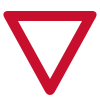

Overtaking is prohibited:
- on hill crests; - on bends with reduced visibility; - immediately before and on level crossings; - immediately before and at crossroads and T-junctions; - immediately before and on marked pedestrian crossings; - when approaching a signed stop with people waiting; - in all places with insufficient visibility; - when there is a danger of collision; - when the road is too narrow.
And you never overtake someone who is already overtaking another vehicle.
The rule
Overtaking is prohibited immediately before and at crossroads and T-junctions.
What the Code says (art. 44, n.º 1)
«Imediatamente antes e nos cruzamentos e entroncamentos» (Portuguese original)
The rule
Overtaking is prohibited immediately before and on marked pedestrian crossings.
What the Code says (art. 44, n.º 1)
«Imediatamente antes e nas passagens assinaladas para a travessia de peões» (Portuguese original)
The rule
Overtaking a vehicle that is already overtaking another is prohibited.
What the Code says (art. 44, n.º 2)
«É proibida a ultrapassagem de um veículo que esteja a ultrapassar um terceiro.» (Portuguese original)

The rule
The bans on hill crests, bends, level crossings, crossroads and overtaking someone who is overtaking do not apply if there are two or more lines of traffic in the same direction, provided you do not use the part for the opposite direction.
What the Code says (art. 44, n.º 3)
«sempre que na faixa de rodagem sejam possíveis duas ou mais filas de trânsito no mesmo sentido, desde que a ultrapassagem não se faça pela parte da faixa de rodagem reservada ao trânsito em sentido oposto.» (Portuguese original)
The rule
The ban near crossroads does not apply to roundabout (gyratory) traffic, on a road with properly signed priority, or when overtaking on the left someone who is turning right.
What the Code says (art. 44, n.º 4)
«O trânsito se faça em sentido giratório» (Portuguese original)
Remember
- Can't see what is coming? Don't overtake (hill crests, bends, places with poor visibility).
- Before and at crossroads, level crossings and pedestrian crossings: prohibited.
- Signed stop with people waiting: prohibited on the approach.
- Never overtake someone who is overtaking.
- Exception: two or more lines in the same direction, without using the opposite side.

Check what you've learnt
2 quick questions. Choose and see straight away if you got it right.
On a road with two lanes (one for each direction), you are approaching a hill crest behind a slow lorry. May you overtake?
Question 1See the answer
B — Overtaking on hill crests is prohibited (art. 44(1)(a)).
On an avenue with two lines in the same direction, you are about to pass a car just before a crossroads, without using the opposite side. Is it allowed?
Question 2See the answer
A — With two or more lines in the same direction, and without using the part for the opposite direction, the ban does not apply (art. 44(3)).