

Information signs are blue rectangular or square panels. They don’t directly forbid or require anything: they tell you what lies ahead. A hospital (avoid noise), a car park, a filling station, a dead end, a one-way road, the start of a motorway or a stop for chapas and buses.


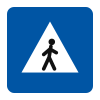


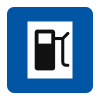

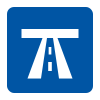
The rule
Near a public transport stop sign, stopping or parking is forbidden less than 3 m in front of it and 15 m to either side.
What the Code says (art. 50, n.º 1, al. c))
«A menos de 3 m para a frente e 15 m para um e outro lado dos sinais indicativos da paragem dos veículos de transporte colectivo de passageiros» (Portuguese original)
The rule
A vertical sign, even an information sign, overrides markings painted on the road.
What the Code says (art. 14, n.º 2)
«c) Prescrições resultantes dos sinais verticais; d) Prescrições resultantes das marcas rodoviárias.» (Portuguese original)
SituationYou are picking up a friend who is waiting at the chapa stop at Praça dos Combatentes.
What you doYou don’t stop right next to the stop sign. You stop outside the forbidden zone: more than 3 m in front and more than 15 m to either side of the sign. art. 50, n.º 1, al. c)
Watch out for this mix-upThinking “it’s only a second” at the chapa stop. The Code forbids stopping **and** parking in that zone, however briefly.
Remember
- Blue rectangular panel = information.
- Hospital: avoid noise.
- Public transport stop: don’t stop less than 3 m in front or 15 m to either side.
- Vertical sign > road markings.

Check what you've learnt
2 quick questions. Choose and see straight away if you got it right.
Near a public transport stop sign, stopping or parking is forbidden within:
Question 1See the answer
A — That is what art. 50(1)(c) says.
What shape are information signs?
Question 2See the answer
B — Information is a blue rectangular panel; the blue disc is mandatory (signs catalogue; art. 13).